What Is Wireless Charging?
Wireless charging technology explained is the transfer of power from a charging pad to a device without physical cables, using electromagnetic induction.
This method eliminates the need for plugging in cables, relying instead on coils in both the charger and device to create a magnetic field that transfers energy. The first commercial wireless charging standard, Qi, launched in 2008 (IEEE). Today, it’s integrated into most flagship smartphones, tablets, and even some earbuds.
Key components:
- Transmitter coil: Inside the charging pad, converts electricity into a magnetic field.
- Receiver coil: Built into devices, converts the field back into electrical current.
- Alignment mechanism: Ensures coils are properly positioned (critical for efficiency).
Most wireless chargers output between 5W and 15W, with higher-wattage options for faster charging. For compatible devices, browse our Wireless Chargers & Power Banks.
How Does Wireless Charging Work?
Wireless charging technology explained operates through electromagnetic induction, where energy transfers between coils when aligned within a magnetic field.
Here’s the step-by-step process:
- Power flow: The charging pad’s transmitter coil receives electricity from a power source.
- Magnetic field creation: The coil generates an alternating magnetic field (typically at 110–205 kHz).
- Energy transfer: The device’s receiver coil intercepts the field, inducing an electrical current.
- Conversion: The device’s circuitry converts this current into DC power to charge the battery.
Efficiency varies: Wireless charging averages 70–75% efficiency (Wireless Power Consortium) versus 85–90% for wired USB-C. Heat generation is a trade-off — pads may warm up by 3–5°C during use. For deeper technical insights, see our Guide to Chargers & Power Banks.
What Is the Qi Standard?
The Qi standard (pronounced "chee") is the universal protocol for wireless charging technology explained, ensuring compatibility across devices and chargers.
Developed by the Wireless Power Consortium (WPC), Qi governs power output (5W–15W), frequency ranges, and safety features like foreign object detection. Over 8,000 devices are Qi-certified (WPC, 2023), including iPhones (since iPhone 8), Samsung Galaxy models, and AirPods cases.
Key Qi features:
- Interoperability: Works across brands if both charger and device are Qi-certified.
- Efficiency tiers: Basic (5W), Fast (7.5W–10W), and Extended Power (up to 15W).
- Safety protocols: Auto-shutoff if misaligned or if metal objects are detected.
For a comparison with MagSafe, visit MagSafe vs Standard Wireless Chargers.
How Does MagSafe Differ From Qi?
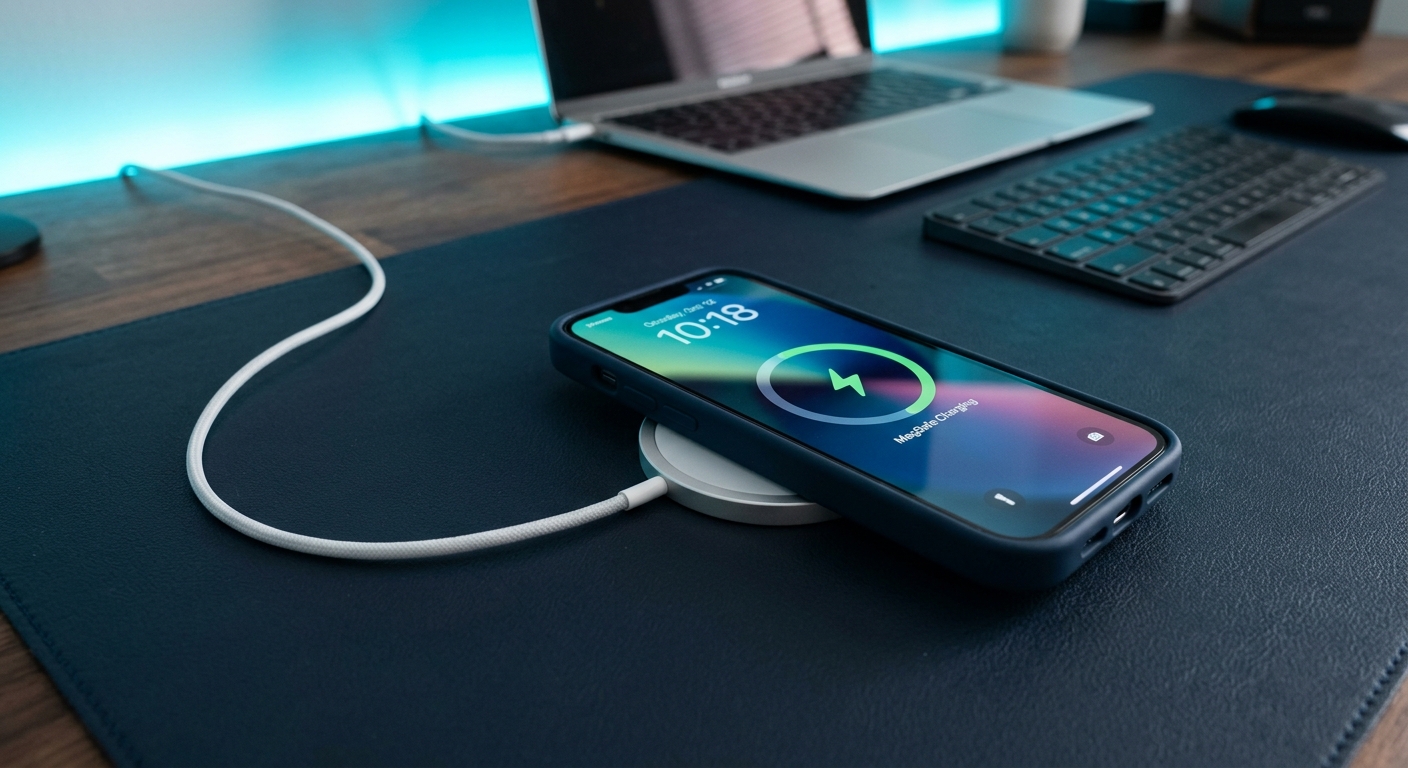
MagSafe is Apple’s enhanced version of wireless charging technology explained, adding magnets for perfect alignment and higher peak power for iPhones.
| Feature | Qi Standard | MagSafe | |
| ------------------ | ---------------------- | ----------------------- | |
| Alignment | Manual positioning | Magnetic snap | |
| Max Power | 15W (Android) | 15W (iPhone 12+) | |
| Compatibility | All Qi-certified devices | Apple devices only | |
| Heat Control | Standard | Optimized cooling |
MagSafe chargers use a ring of magnets to center the iPhone perfectly, reducing energy loss from misalignment. However, non-Apple devices revert to standard Qi speeds. Pair MagSafe with compatible Smartwatch Accessories for a seamless Apple ecosystem.
What Are the Limitations of Wireless Charging?
Wireless charging technology explained has three key limitations: slower speeds, heat generation, and positioning requirements.
- Speed: Wireless charging is 30–50% slower than wired fast charging (e.g., 7.5W vs 18W+).
- Heat: Devices can heat up by 4–8°C during charging (IEEE), potentially reducing battery lifespan over time.
- Alignment: Misaligned coils drop efficiency by up to 40%. Thick cases (>3mm) or metal plates can block charging entirely.
Practical considerations:
- No simultaneous use: Most phones can’t charge wirelessly while in landscape mode (e.g., for video calls).
- Distance limits: Coils must be within 4–8mm for effective power transfer.
For case compatibility tips, check our Guide to Phone Cases.
Which Devices Support Wireless Charging?
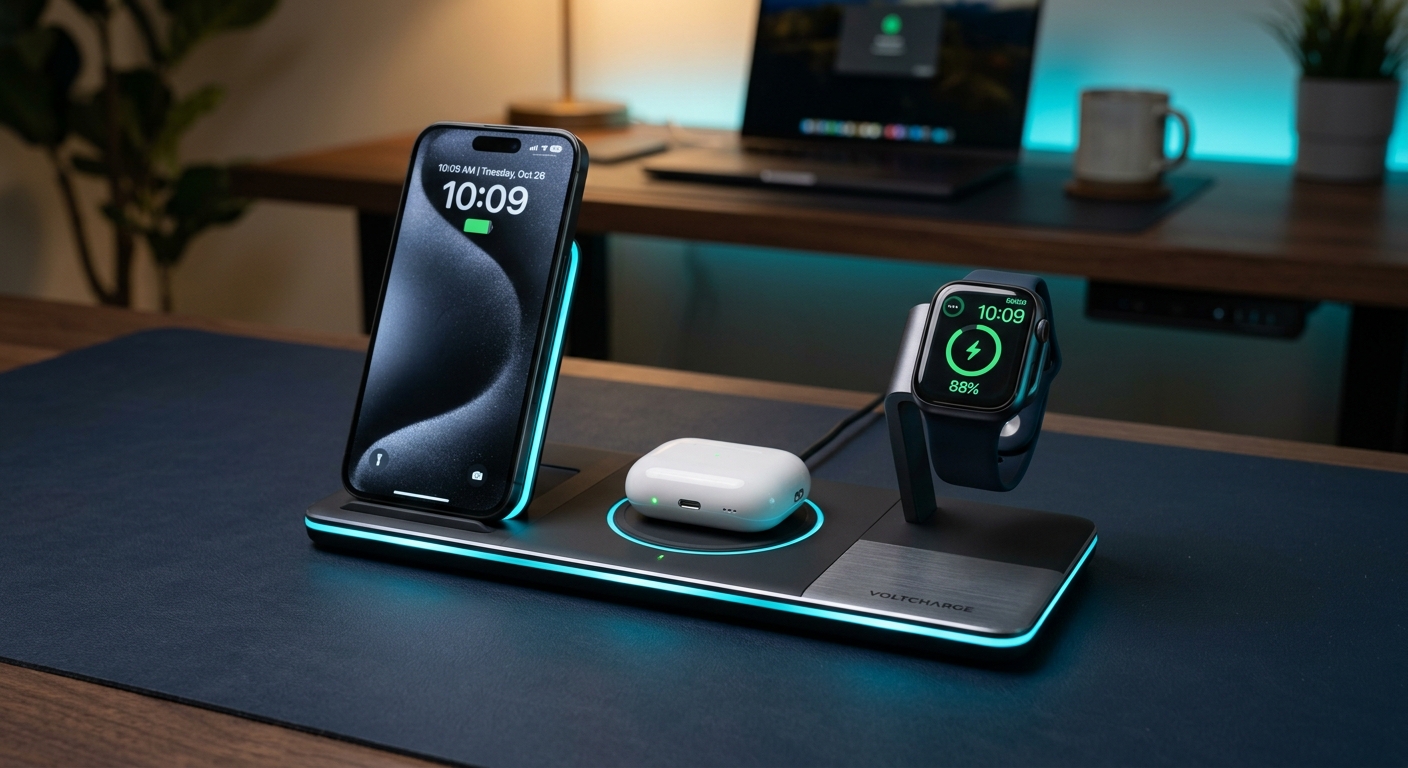
Wireless charging technology explained is supported by most flagship smartphones, select earbuds, and smartwatches with Qi or MagSafe compatibility.
Smartphones:
- Apple: iPhone 8 and later (Qi), iPhone 12+ (MagSafe)
- Samsung: Galaxy S6 and later (Qi)
- Google: Pixel 3 and later (Qi)
Other devices:
- AirPods (2nd/3rd gen and Pro with wireless case)
- Samsung Galaxy Buds Pro
- Apple Watch (all models)
Over 90% of premium smartphones sold now include wireless charging (IDC, 2023). For accessories that complement these devices, see Phone Cases & Screen Protectors.
Bottom Line: Is Wireless Charging Worth It for You?
Wireless charging technology explained offers convenience but trades off speed and efficiency compared to wired charging.
Key takeaways:
- Qi is universal, while MagSafe optimizes for Apple devices with magnetic alignment.
- Ideal for bedside/desk use where speed isn’t critical.
- Check compatibility — not all cases or devices support it.
For a curated selection, explore our Shop Wireless Chargers.